We are looking for partners across Europe +37061155995 info@ekofin.lt



Pig Farms Today: Are Odors and Sludge Still “Inevitable”?
An odor-free pig farm – myth or reality? A real-life example from China shows that biological wastewater treatment can deliver fast and measurable results.
Daiva
2/4/20263 min read
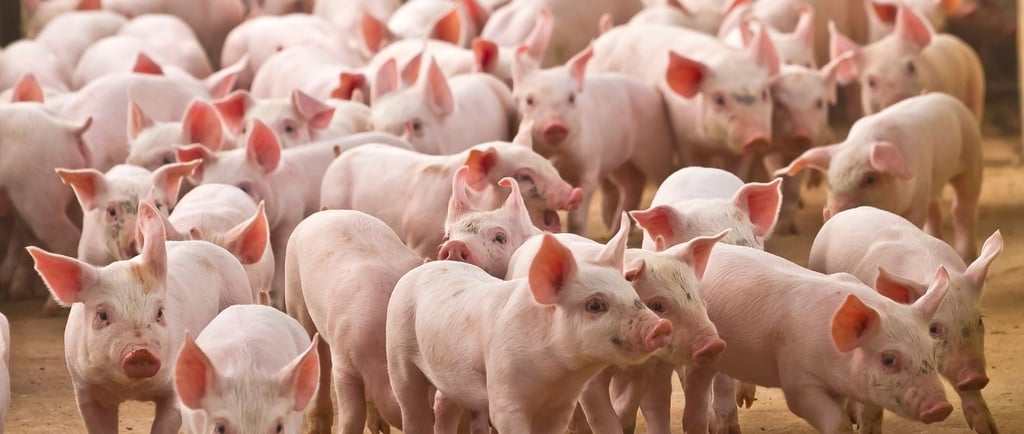
Pig Farms Today: Are Odors and Sludge Still “Inevitable”?
Modern pig farming is changing rapidly. As farm sizes increase, manure removal becomes automated, and wastewater recycling and biogas systems are introduced, hygiene and biological balance are no longer optional advantages—they are essential conditions for sustainable operation.
Automated scraping, flushing, and manure transport systems help maintain cleanliness, reduce manual labor, and lower stress for both animals and workers. However, they also highlight another, often overlooked question: what happens next to the removed wastewater and organic residues?
Odor Is Not the Cause—It Is a Symptom
Unpleasant odors in pig farms are often considered an unavoidable part of livestock production. From a biological perspective, however, odor is a warning signal. It indicates that organic matter is not being fully degraded, anaerobic “dead zones” are forming, and excess sludge is accumulating within the system.
In other words, odor itself is not the problem—it is the result of biological imbalance.
Sludge: A Silent Long-Term Risk
Where sludge accumulates, pathogens, ammonia, and nitrogen and phosphorus compounds inevitably accumulate as well. Such conditions create a favorable environment for insects, rodents, and persistent odors.
Even in modern farms, sludge is often treated as an unavoidable nuisance that must be periodically removed. This approach, however, leads to continuous costs, increased risk, and system instability—especially as organic loading increases.
Why Biological Processes Are Gaining More Attention
In advanced pig farms, wastewater management is increasingly viewed as an integrated, multi-stage biological process. It typically includes solid–liquid separation, anaerobic digestion, aeration, and wastewater recycling or reuse.
Laboratory analyses of such systems show significant reductions in ammonia (in some cases up to 90%), decreases in BOD and COD to regulatory limits, and conversion of organic waste into more stable, lower-risk fractions.
Most importantly, odors are not masked or neutralized—they simply no longer form, because the biological conditions that generate them are eliminated.
Hygiene and Biosecurity Go Hand in Hand
A cleaner environment means fewer insects, lower disease transmission risk, and a more stable microbiological ecosystem. This has become especially important today, as biosecurity is one of the key survival factors for pig farms.
Even without direct claims of “disease prevention,” one thing is clear: biologically stable systems reduce risks and help farms manage uncertainty more effectively.
Practice Shows That Solutions Exist
For more than a decade, pig farms around the world have been operating systems that treat wastewater on-site, reuse treated water, and meet discharge standards without relying on aggressive chemical treatment.
These examples demonstrate that even under high organic loading, it is possible to develop pig farming models with near-zero environmental impact—not in theory, but in real-world operation.
Practical Example: Longyan City, China
To illustrate that this is not merely a theoretical concept, it is worth looking at a real-life example.
The Xialin pig farm in Longyan City, China, produces approximately 6,000 pigs per year. The farm attracted particular attention when it was visited by a delegation of food supply and procurement specialists from Beijing universities.
After the visit, Mr. Yu, a representative of the Tsinghua University Catering Service Center, commented:
“I have visited many pig farms, and there is always a strong odor. But when I came to this farm, I could not smell any odor at all.”
Mr. Ran, a representative of the Peking University Catering Service Center, also emphasized that the farm is managed very professionally and fully meets high food supply standards.
The owner of the Xialin farm, Mr. Lin, shared specific performance results. After treatment, the ammonia nitrogen concentration reaches 51.3 mg/L, while the Chinese discharge limit is 80 mg/L. BOD and COD parameters also meet the applicable discharge standards.
According to Mr. Lin:
“We use BioCleaner. At first glance, the equipment looks simple—even crude—but its benefits are significant. It digests organic sludge and removes unpleasant odors from the treated water. The odor disappeared within three to five days.”
This farm was the first in Longyan City to implement BioCleaner technology.
You can watch the video report from the farm here:
https://youtu.be/RhaP6tnUXbI?si=p9IkqX-1irhnmHEZ

Follow us
Biological wastewater treatment technology:
All rights reserved © 2025 Biocleaner.lt

Products: