We are looking for partners across Europe +37061155995 info@ekofin.lt



Food Industry Wastewater Treatment: Technological Challenges
Key challenges in food industry wastewater treatment, limitations of biological systems, and practical experiences that help ensure a stable treatment process.
Daiva
1/8/20263 min read
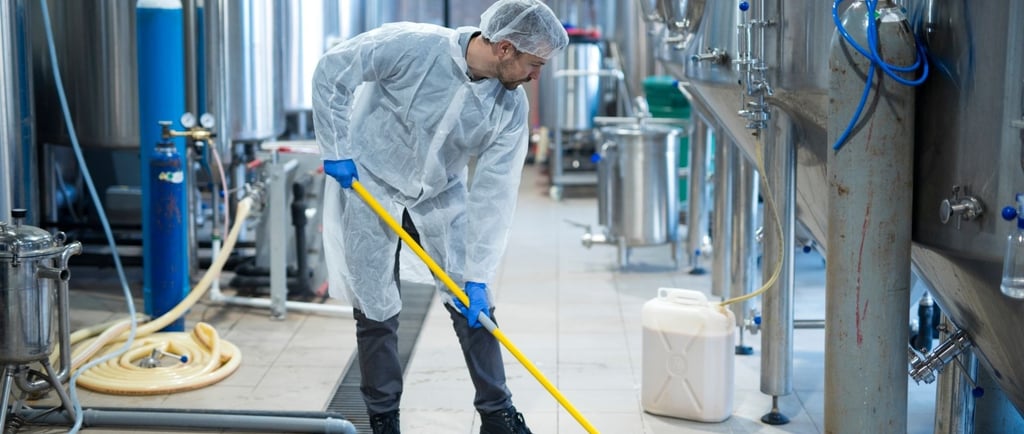
Food Industry Wastewater Treatment
In food industry facilities such as dairy, meat, beer, spirits, or sugar production, generated wastewater is often characterized by high and highly variable organic loads. Elevated BOD and COD values, excess fats and proteins, nitrogen and phosphorus compounds, as well as seasonal flow fluctuations make wastewater treatment one of the most complex technological stages. For these reasons, the effectiveness of solutions should be assessed not theoretically, but under the specific conditions of each individual facility.
Limitations of Biological Treatment in Industry
Biological wastewater treatment is the primary stage for the removal of organic pollutants; however, in industrial applications it often operates close to its technological limits. Aerobic systems are sensitive to sudden load increases, while excess sludge formation, odors, and process instability become not only operational but also environmental issues. At high nutrient concentrations, insufficiently treated wastewater may contribute to eutrophication, reducing oxygen levels in water bodies and deteriorating ecological conditions.
Recurring Problems
Compared to municipal wastewater, food industry effluents are often several times more polluted, and their composition strongly depends on the production process, seasonality, and even specific technological stages. High organic loads result not only in elevated BOD and COD values but also in intensive microbial growth, leading to excess sludge that requires additional handling. Odor-related issues also develop quickly—when wastewater is stored, anaerobic conditions form, releasing hydrogen sulfide, ammonia, and other gases.
Additional complexity arises from unstable loads caused by production peaks, campaigns, cleaning cycles, or start-ups. Biological systems designed for operation under steady flow conditions respond very sensitively to such fluctuations. Even when part of the wastewater is discharged to municipal treatment plants, practical problems occur—primary treatment units are not designed to handle large quantities of fats and organic matter.
In short, food industry wastewater is difficult to treat to discharge standards not due to a lack of technologies, but because biological systems often operate close to their operational limits and are highly sensitive to changes in load and conditions.
Typical Wastewater Treatment Process in the Food Industry
In food industry facilities, wastewater treatment usually consists of several stages aimed at gradually reducing pollutant loads and stabilizing biological processes. A typical scheme includes primary treatment, flow equalization and neutralization, biological treatment, and final water and sludge management.
During primary treatment, solids and fats that may interfere with subsequent processes are removed. Flow equalization and pH stabilization help reduce load fluctuations in biological systems, especially during production peaks or seasonal variations. In the biological stage, aerobic and anaerobic microorganisms are applied depending on wastewater concentration and composition. Anaerobic treatment is more commonly used for highly concentrated wastewater, as it effectively reduces organic loads and generates less excess sludge, while aerobic systems are typically applied for final polishing and nutrient reduction.
In industrial practice, more complex combined schemes are also used, incorporating various filtration, flotation, oxidation, or chemical treatment stages. Such systems allow for high treatment efficiency but increase technological complexity and operational demands.
When Other Solutions Are Needed
During operation, situations arise where conventional biological treatment schemes become difficult to apply. This is most often related to limited space for tanks, increasing wastewater flows, changes in production profiles, or the need to reduce energy and chemical consumption. In such cases, traditional aeration tanks or activated sludge systems may no longer ensure stable operation.
In practice, compact or modular biological treatment solutions are applied to address such conditions. These can be integrated into existing infrastructure without significant construction modifications. They are used when continuous 24/7 operation is required, excess sludge generation needs to be reduced, odors must be controlled, or wastewater must be prepared for discharge to municipal treatment plants. In some cases, treated water may also be reused for technical or auxiliary processes.
Research and Practical Application Experience
Studies and practical trials conducted in dairy processing, cheese production, and meat processing sectors show that the effectiveness of biological wastewater treatment strongly depends on how well the system adapts to real operating conditions. During trials conducted not in laboratory environments but in active production systems, stable reductions of organic pollutants, improved odor control, and lower excess sludge generation were observed compared to conventional schemes operating close to their technological limits.
These experiences are important not as isolated technological examples, but as broader insights for food industry companies. Practice shows that effective wastewater treatment does not begin with the selection of a single solution, but with the evaluation of the entire process: actual wastewater loads, flow variability, odor formation risks, and existing infrastructure capabilities.
Food industry wastewater is rarely stable or easily predictable; therefore, in practice, biological treatment must be viewed as a flexible and continuously managed system. Solutions that allow systems to adapt to changing conditions and reduce operational risks become an essential requirement for stable operation rather than an optional addition.
Such an approach enables companies not only to meet environmental requirements but also to avoid recurring emergency situations, odor-related issues, and difficult-to-predict operational costs. The final goal remains simple—a wastewater treatment system that operates reliably and does not become a daily challenge for either technologists or company management.
Research areas:
Wastewater treatment trials with Biocleaner in milk processing.
Wastewater treatment trials with Biocleaner in cheese production.
Wastewater treatment trials with Biocleaner in meat processing.
Thank you for reading. If you liked it and think that more people would like to know about it, please share.

Follow us
Biological wastewater treatment technology:
All rights reserved © 2025 Biocleaner.lt

Products: