We are looking for partners across Europe +37061155995 info@ekofin.lt



Biological Wastewater Treatment: How Odors Disappeared and Phthalate Concentrations Decreased Within 1.5 Days
This text is based on a study conducted by Vytautas Magnus University and presented in the conference proceedings “Human and Nature Safety”.
Daiva
Biological Wastewater Treatment Technology: Up to 92% Lower Phthalate Concentration and Eliminated Odors
Do you know many technologies that can simultaneously:
effectively reduce organic pollution
break down micropollutants such as phthalates and PFAS compounds
eliminate unpleasant odors
consume very little electricity
and remain simple to operate?
Most of the time, we imagine that modern wastewater treatment must be complex — full of sophisticated equipment, chemical processes, automation, and high energy consumption.
But sometimes, nature itself provides the most effective solutions to the most complex problems.
Nature has long developed mechanisms capable of breaking down many of the pollutants we release into the environment through households, industry, or waste management. The only question is: how can these processes be applied in practice in a stable and efficient way?
One such technology is “Biocleaner” — a biological treatment system based on immobilized microbial consortia developed using geobacteria technology.
These microorganisms adapt to their environment, multiply as needed, and break down pollutants without continuous replenishment.
The system can treat various biodegradable pollutants — from conventional organic load to more complex micropollutants such as phthalates, and according to manufacturer data, even PFAS group compounds.
Key advantages:
odor elimination
reduced sludge production
low energy consumption
simple operation
And most importantly — this is not just theory.
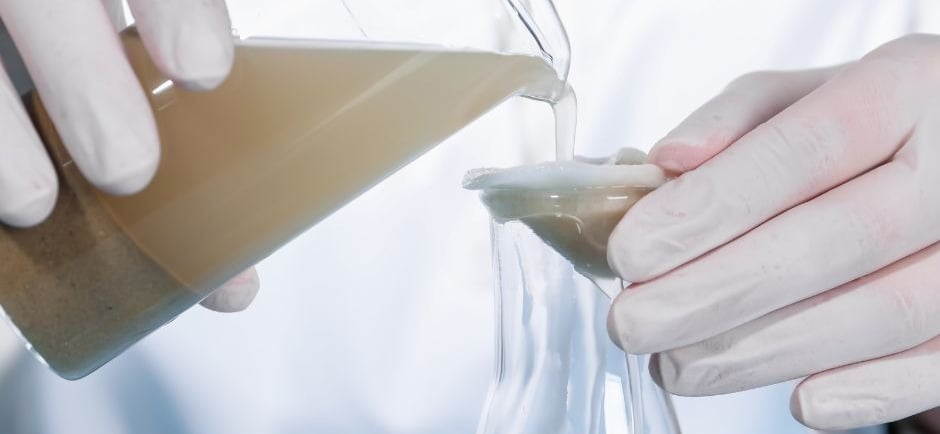
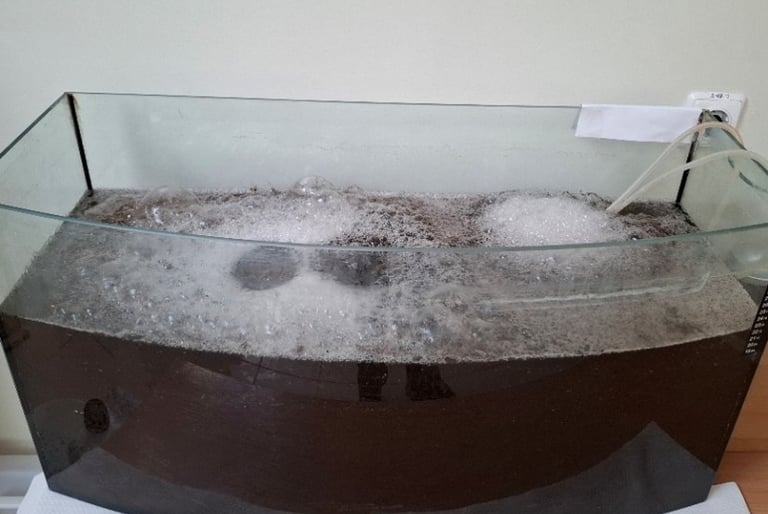
Researchers at Vytautas Magnus University conducted studies using real wastewater to evaluate the efficiency of Biocleaner biological reactors “Chem5” and “BioSix”.
Studies conducted on real wastewater
Different types of wastewater were used in the research:
municipal wastewater from Kaunas
municipal wastewater from Šiauliai
sludge filtrate from Telšiai wastewater treatment plant — an especially complex and concentrated stream
It is important that the studies were carried out not on model solutions, but on real wastewater.
The results showed a clear trend — biological reactors are highly effective at reducing organic pollution.
For example:
in Kaunas wastewater, organic pollution reduction reached more than 90–98%
similarly high treatment efficiency was achieved in Šiauliai wastewater
Phthalates — one of the most challenging areas
In Šiauliai wastewater, phthalates were also analyzed — one of the more complex micropollutants commonly found in wastewater and the environment.
The results were particularly interesting:
DEHP concentration decreased by about 92%
DBT decreased by about 82%
After treatment, these substances no longer exceeded regulatory limits.
This study evaluated phthalate removal specifically, while manufacturer data suggests that the technology may also be applicable for reducing PFAS group compounds.
What about odors?
One of the most interesting and practically important observations was not numerical, but sensory — something that could be directly noticed in the laboratory.
As the researchers described:
“On the first day there was a very strong odor, so we kept the lab window open even though it was about -15°C outside. However, by the second or third day, the smell disappeared.”
This occurred roughly within 1.5 days after starting the bioreactors.
Odors in wastewater typically arise when anaerobic processes occur, producing hydrogen sulfide (H₂S), mercaptans, and other volatile compounds.
Once biological processes stabilize and microbial activity becomes efficient, these processes stop — resulting in reduced or completely eliminated odors.
Important considerations about the research
The studies were conducted under aerobic conditions, without applying anaerobic or anoxic phases.
This means that:
nitrogen and phosphorus removal was not fully modeled
results depended on specific conditions and wastewater composition
However, the potential for reducing organic pollution and removing micropollutants was clearly confirmed.
What does this mean in practice?
These studies suggest that biological technologies can be:
an effective solution for reducing organic pollution
a promising method for removing complex micropollutants
and a very important tool for addressing odor problems
Most importantly, the results were obtained using real wastewater, not theoretical models.
Of course, every wastewater stream is different, so the efficiency of biological processes depends on specific conditions, pollutant composition, and properly selected technological solutions.
However, these experiments once again highlight a simple idea — nature has long known how to clean what humans have polluted. Sometimes, it is enough to select the right microorganisms and create the right conditions for them to do their work.
Where can the study be found?
The full study description and results can be found in the conference proceedings:
“Analysis of Wastewater Treatment Technologies for Priority Pollutants Removal” — p. 140
Proceedings of the conference “Human and Nature Safety 2026”
What’s next?
Today, the most important question is no longer “do biological technologies work?”
Much more relevant is: how can they be properly adapted to specific wastewater streams so that they work as efficiently, stably, and economically as possible?
And it seems that this is where the greatest potential of the future lies.

Follow us
Biological wastewater treatment technology:
All rights reserved © 2025 Biocleaner.lt

Products: